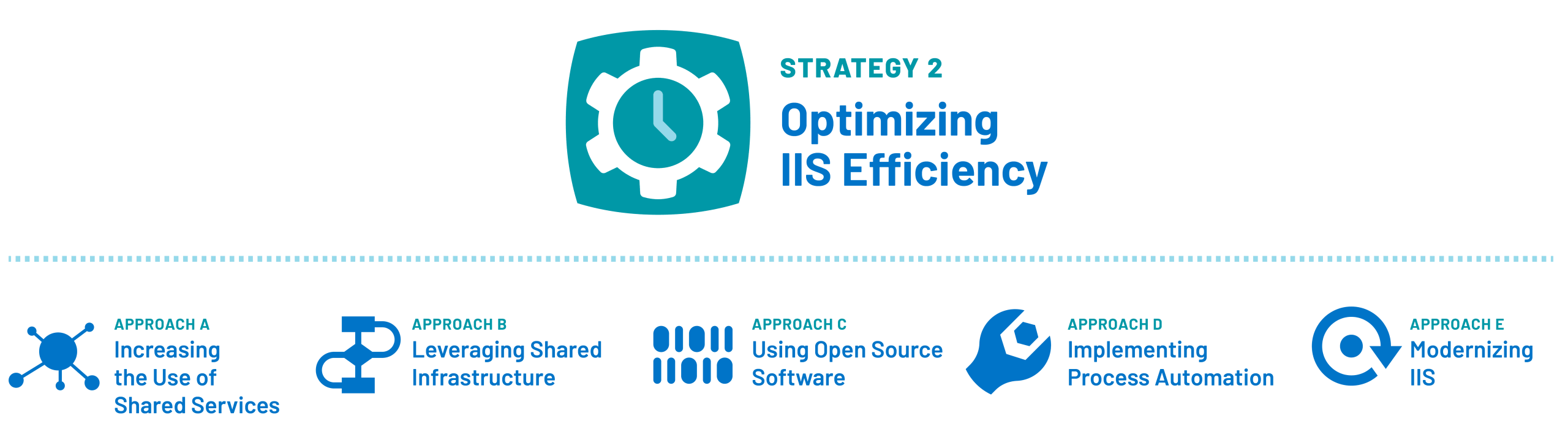
Optimizing efficiency is a key component of IIS sustainability.
As technology costs rise and funding environments remain uncertain, jurisdictions must find ways to maximize the value of existing resources, use opportunities to streamline business processes, and adopt functionality that reduces or controls costs associated with IIS.2
Improving efficiency can help reduce duplication and free up resources that can be reinvested in modernization and long-term sustainability (see Success Stories from the Field: Slowing the Curve to Manage Rising IIS Costs).
This section highlights five practical approaches for optimizing IIS efficiency: increasing the use of shared services, leveraging shared infrastructure, using open source software, automating processes, and modernizing the IIS. These approaches were selected because they are broadly applicable, feasible across a range of technical environments, and supported by emerging examples from the field. They offer opportunities to strengthen IIS sustainability by reducing duplication of effort, lowering long-term operational costs, improving performance and scalability, as well as building on existing public health and enterprise investments.