

In this three-part blog series, Sarah Gilbert, Director of PHII’s Informatics Academy, explores how the three focus areas of informatics – people, process, and technology – illustrate the Academy’s approach to training the public health workforce.
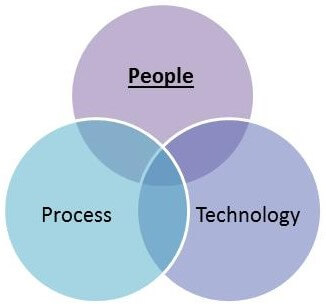 At PHII, our approach to informatics starts with people. They are at the heart of what we do and who we serve. In our work, we bring individuals of diverse backgrounds and perspectives together to collaborate on solving the challenges faced by public health. In the Academy, we specifically focus on workforce development, providing informatics education needed to advance public health practice. When I think “people” for the Academy, I think of all the people with tremendous skill and expertise that work together to create and deliver relevant, practical content to the public health practitioners that we serve.
Our Academy team has a wealth of unique experience that drives the success of our workforce development projects.
Teresa Dussault, Training Operations Manager, ensures the Academy runs smoothly. With a background in project management and operations across a variety of industries, she builds the necessary supports to ensure we produce high-quality, relevant training and consistently improve our processes.
Jessica Hill is responsible for day-to-day management of our projects. Her past experience in public and private partnerships, public health, and higher education is integral in building training products that resonate with our audience. Her project management skill and attention to detail are extraordinary.
As Director of the Informatics Academy, I have had the opportunity to contribute my experience in the emerging field of learning technology to the training solutions we create in the Informatics Academy. My background designing and developing customized instructional experiences supports Academy innovation. We leverage cutting-edge technologies to deliver content when and where our audience needs it. I don’t settle for typical training solutions – I am always pushing our team for something better.
In addition to the Academy team, we have a wealth of subject matter expertise at our fingertips from other PHII staff. With experience in informatics, public health, health care, business analysis, health information systems, communications, strategic planning – I could go on – we have much of the necessary expertise in-house to inform our workforce development projects. We also work with a variety of contract staff with recognized expertise in public health and informatics. They lend years of on-the-ground experience to our projects in areas such as interoperability, surveillance, maternal and child health, data standards and more. We collaborate with informatics thought leaders and practitioners in the field to best understand the needs of the public health workforce and develop practical resources to support the work they do. This connection to the people we serve is important, because it enables us to ensure we produce solutions that are realistic, practical and tailored to the training need. We don’t only want people to know, we want to support them to do.